


Whey Protein — Complete, Evidence-Based Guide
Science-backed benefits, dosage, timing, comparisons, myths, and expert insights to help you use whey protein the right way.
Quick overview — What this guide covers
This long-form guide explains: what whey is, how it’s made, how it works in the body, benefits backed by recent research, common myths, safety, the right dosages and timings, comparisons with other protein sources (casein, egg, plant), and practical tips for picking quality whey.
1) What is whey protein (plain English)
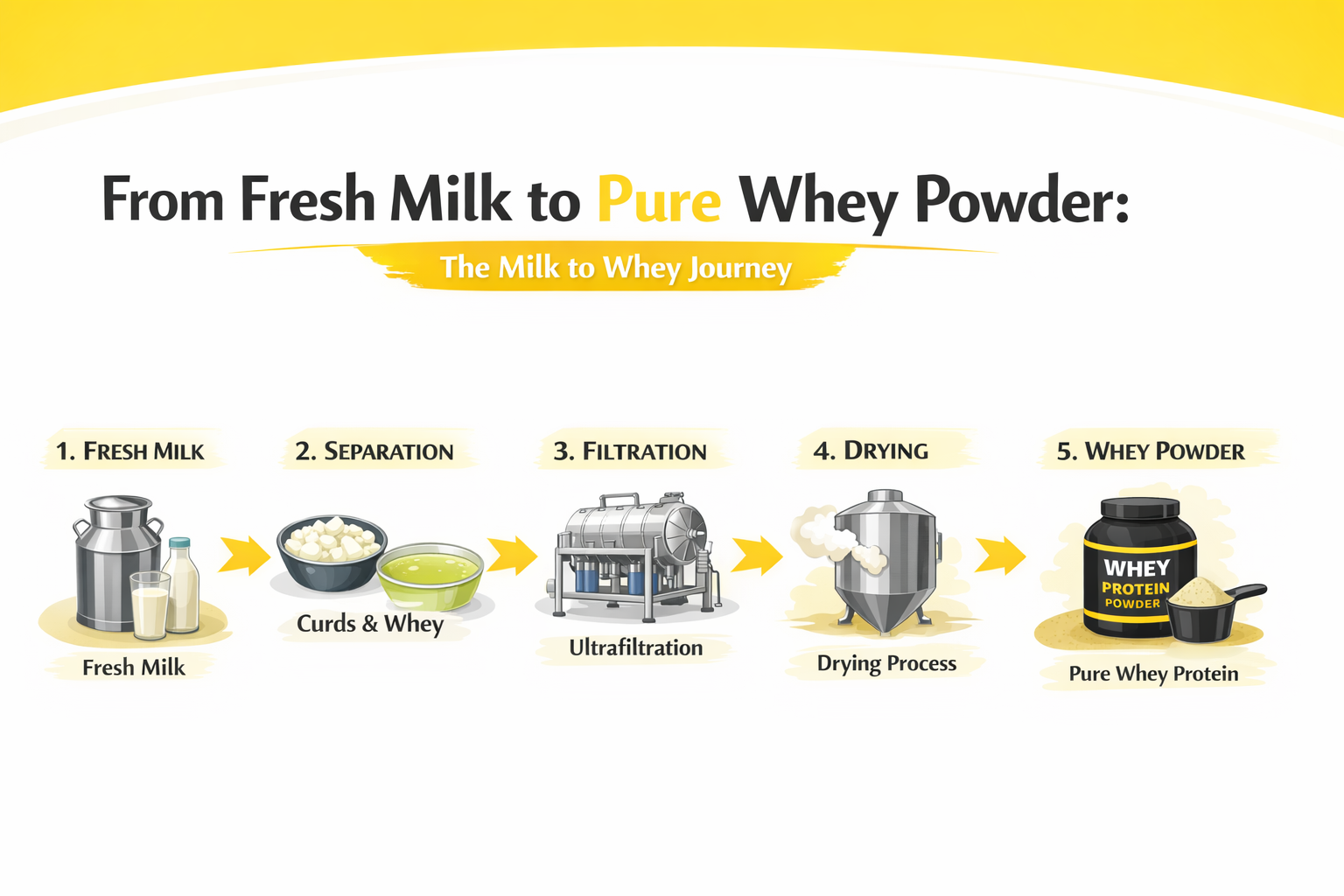
Whey is the liquid fraction of milk left over when cheese is made. Manufacturers filter and dry that liquid to concentrate the proteins into powders you buy at stores. Because it contains all nine essential amino acids and is rapidly absorbed, whey is called a “complete, fast protein.”
2) How whey works inside your body — the science (easy to follow)
When you ingest whey, your digestive system breaks it down into amino acids. Those amino acids, especially leucine, trigger the muscle-building machinery (mTOR pathway) and increase muscle protein synthesis (MPS). Multiple studies show leucine-rich whey stimulates MPS and supports muscle growth when paired with resistance training.
Why leucine matters
Leucine acts as a “switch” — it signals muscles to build. A practical takeaway: a serving that provides ~2.5–3g leucine is effective for stimulating MPS in younger adults; older adults may need slightly more.
3) Evidence: What research shows whey does well
Muscle growth & training
Randomized trials and meta-analyses show whey, combined with resistance training, improves lean mass and strength versus placebo. Mechanistic work also shows whey amplifies exercise-driven mTOR activation and early signalling that leads to muscle repair.
Weight management
High-protein diets — often with whey supplementing meals — increase satiety and help preserve lean mass during calorie deficits. That’s why whey is common in fat-loss programs.
Older adults and sarcopenia
Whey (especially leucine-enriched whey) combined with resistance training or vitamin D has shown benefits for muscle mass in older adults with sarcopenia in clinical studies. This makes whey a useful tool in healthy ageing strategies.
Immune and bioactive effects
Whey contains small amounts of biologically active compounds (lactoferrin, immunoglobulins) that may modulate immunity and inflammation — not a cure-all, but a measurable functional component of high-quality whey.
4) How much whey / protein do you need? (practical rules)
Base your total daily protein goal on your body weight and goals:
- Sedentary: ~0.8 g/kg/day
- Active / endurance: ~1.2–1.6 g/kg/day
- Strength / muscle gain: ~1.6–2.2 g/kg/day
Whey is a convenient way to reach those totals; it’s not the only source. Whole foods (meat, dairy, eggs, legumes) matter too. Recent reviews discuss optimal intake ranges and population differences.
5) Best times to take whey (evidence & pragmatism)
Most useful timings:
- Post-workout (0–60 min): Fast amino acid delivery supports recovery and MPS when paired with resistance exercise.
- Morning: After an overnight fast to reduce muscle breakdown.
- Between meals: To reach daily protein targets and control appetite.
- Before bed: For some people a slow protein (casein) + whey blend works well to extend amino acid availability overnight.
6) Comparing whey, casein, egg & plant proteins (short, actionable)
Whey
Fast absorption, leucine-rich, great around workouts; ideal for MPS stimulation.
Casein
Slow release; useful before sleep to sustain amino acids slowly.
Egg
High-quality complete protein; good whole-food choice, moderate digestibility.
Plant (soy, pea, rice)
Can be effective — blends + added leucine often match whey for MPS. Newer studies show leucine-enriched plant blends perform similarly to whey in many contexts.
7) Side effects, safety & kidney concerns (what evidence says)
For healthy people, moderate to high protein intakes appear safe, but there is evidence linking very high long-term protein intake to kidney stress in some studies — especially when pre-existing kidney disease exists. If you have kidney disease or other chronic conditions, consult a doctor. Recent reviews discuss both benefits and potential risks.
Common mild issues
- Bloating / gas — often lactose in concentrates. Isolates are lower in lactose.
- Acne in some individuals — possibly related to hormones/quality additives.
- Digestive upset — try half-scoops and a different formulation if needed.
8) Quality checks — how to pick a good whey powder
Not all powders are equal. Look for:
- Clear ingredient list (protein source listed first)
- Protein per scoop that matches nutrition facts (no misleading serving sizes)
- 3rd-party testing or certificates (e.g., Labdoor, Informed-Sport)
- No amino-spiking: watch for free-form amino acids listed near the end of ingredients (this inflates “protein” numbers without real whole-protein benefit)
- Minimal fillers, unnecessary sweeteners, or proprietary blends with hidden ratios
Consumer reports and test labs have flagged amino-spiking and mislabeled protein content in some products — so transparency matters. (Tip: % protein per 100 g tells you quality: 70%+ is typical for concentrates, 90%+ for isolates.)
9) Who benefits most — use-cases
- Resistance trainees: Faster recovery & more MPS
- Older adults: Helps fight sarcopenia when combined with training & vitamins.
- Busy professionals: Convenient high-quality protein between meals
- Veg-curious: Plant-protein blends + leucine can be a good alternative
10) Lesser-known/under-discussed topics
Protein timing is less critical than total daily intake
While post-workout whey gives an advantage, literature suggests that total daily protein and hitting leucine thresholds across meals matter more than an exact 30-minute “anabolic window.”
Whey contains functional peptides
Small bioactive peptides (e.g., lactoferrin) in whey may have immune and anti-inflammatory roles, contributing beyond just amino acids.
Not all protein labels are honest
Amino-spiking uses cheap free amino acids to inflate protein numbers. Look for third-party lab tests to be sure.
Protein Calculator — Find Your Daily Target
11) Practical tips & quick recipes
- Mix whey with milk or water after workouts — milk adds calories and slower proteins.
- Blend whey with banana + oats for a post-workout meal.
- Use whey in pancakes or smoothies to sneak extra protein into meals.
12) Final summary — evidence-driven takeaways
Whey protein is a proven, convenient way to boost high-quality protein intake. It is especially effective around workouts and for older adults when combined with resistance training. Choose high-quality, transparently tested whey, track total daily protein, and tailor timing to your schedule. If you have chronic kidney disease or other health concerns, consult your healthcare provider before starting high protein supplementation.
Scientific References & Further Reading
- Morton RW et al. (2023). Protein Intake to Maximize Muscle Mass
- Phillips SM & Van Loon LJC (2023). Dietary Protein for Athletes
- EFSA Panel (2022). Dietary Protein Reference Values
- Friedman AN (2020). High-Protein Diets and Kidney Health
- Rondanelli M et al. (2023). Whey Protein and Sarcopenia
- Pal S et al. (2015). Whey Protein and Metabolic Health
All references are from peer-reviewed journals and public medical research databases.


